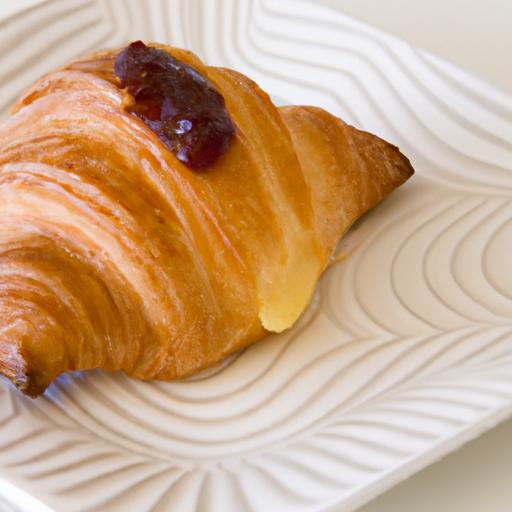
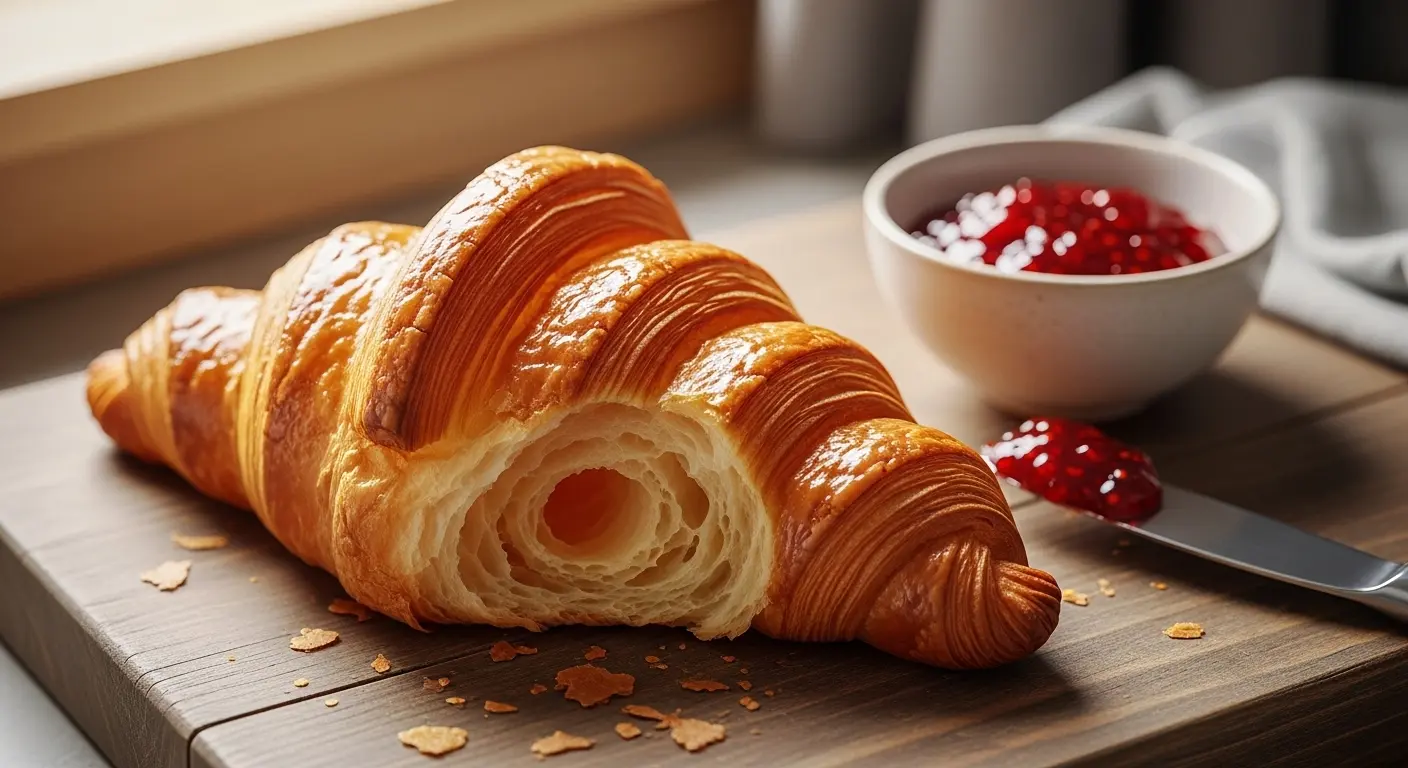

There’s something undeniably enchanting about the simple pleasure of a butter croissant paired with a dollop of jam-a classic combination that has delighted taste buds for centuries. Each flaky layer of the golden croissant tells a story of meticulous craftsmanship, where butter is folded and folded into light, airy dough to create that signature crispness and melt-in-your-mouth texture. When complemented by the sweet, vibrant burst of fruit jam, this humble pastry transforms into a perfected treat that embodies both tradition and indulgence. In this article, we’ll explore the art and science behind the butter croissant with jam, uncovering why this timeless duo continues to captivate morning routines and café menus around the world.
Butter Croissant with Jam: The Art of Crafting the Perfect Flaky Delight
Butter croissant with jam is a timeless pastry that brings together layers of delicate, buttery flakiness with the sweet burst of fruit preserves. Rooted in French baking tradition, the croissant’s light, airy texture comes from skills honed over centuries-making each bite an elegant balance of texture and flavor. I still remember my first experience mastering these flaky layers, the smell of butter and caramelizing crust filling my kitchen, a moment that transformed my approach to pastry. Today, I’m thrilled to share how to craft these croissants beautifully at home, paired with jams that elevate every bite.
Prep and Cook Time
- Preparation: 4 hours (includes chilling and resting)
- Baking: 15-20 minutes
- Total Time: Approximately 4 hours 20 minutes
Yield
6 large, golden butter croissants
Difficulty Level
Advanced: Requires patience and precision but utterly rewarding
Ingredients
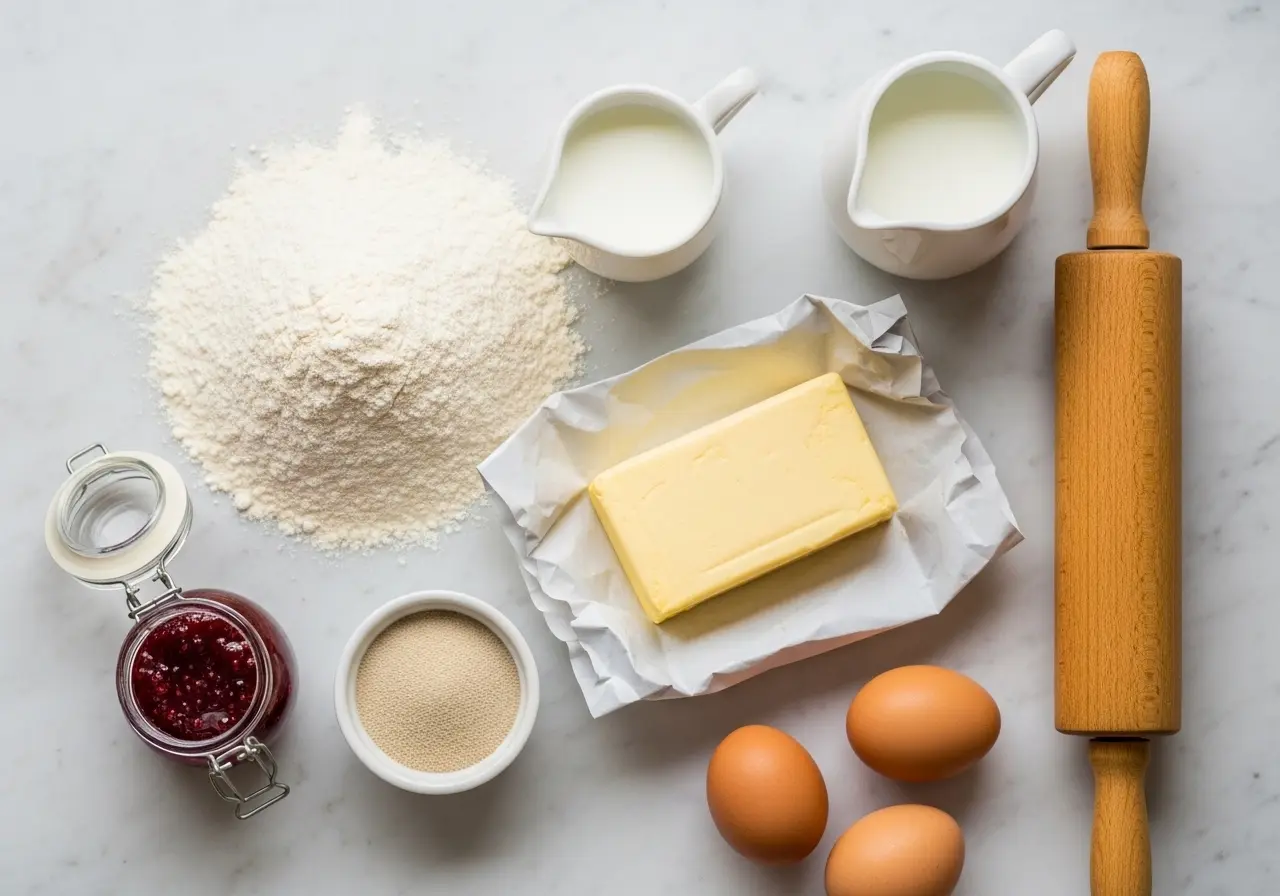
- 3 ½ cups all-purpose flour, sifted
- ½ cup whole milk, warm (90°F/32°C)
- ¼ cup granulated sugar
- 2 tsp salt
- 2 ¼ tsp (1 packet) active dry yeast
- 1 cup (225g) unsalted butter, cold, for laminating
- 1 large egg (for egg wash)
- High-quality fruit jam (such as apricot, raspberry, or strawberry), for serving
Instructions
- Activate the yeast: Whisk yeast into warm milk with a pinch of sugar. Allow foam to form (about 5-7 minutes).
- Prepare the dough: In a large bowl, combine sifted flour, sugar, and salt. Add yeast mixture and mix until a rough dough forms. Knead on a floured surface for 8-10 minutes until smooth and elastic.
- First rest: Shape dough into a ball, cover with plastic wrap, and chill in refrigerator for 1 hour.
- Prepare butter block: Place cold butter slabs between parchment paper and pound gently with a rolling pin into a 7×7 inch square. keep chilled.
- Laminate the dough: Roll dough into a 10×10 inch square, place butter block in center, fold dough edges over to encase butter completely. Seal edges gently.
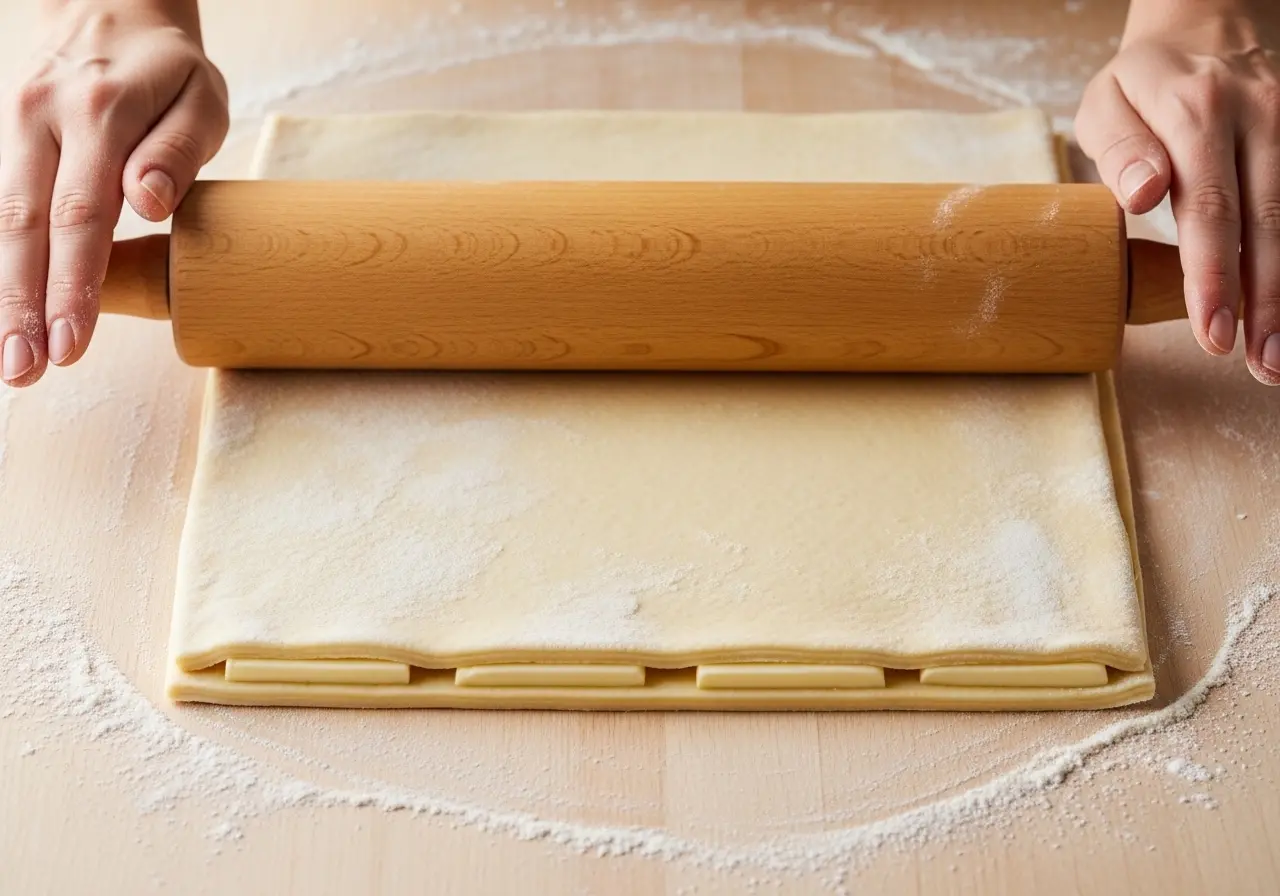
- Roll and fold (turns): roll dough into a 20×10 inch rectangle. Fold into thirds (like a letter). Wrap in plastic and chill for 30 minutes. Repeat this roll-fold-chill sequence two more times, ensuring the dough stays cold to maintain the butter layers.
- Shape croissants: Roll dough out to 20×12 inches. Slice into triangles about 5 inches wide at the base. Starting from the base, roll each triangle tightly toward the tip to form a crescent.
- Proof: Place croissants on a baking sheet lined with parchment, cover with a damp towel, and proof at room temperature for 1.5-2 hours until doubled in size. Patience is key for airy layers!
- Egg wash and bake: Preheat oven to 400°F (200°C). whisk the egg and brush each croissant lightly for a glossy golden finish. Bake 15-20 minutes until deep golden brown and puffed fully.
- Cool and serve: Let croissants cool for 10 minutes before serving. Serve with generous dollops of your chosen fruit jam, allowing the sweet acidity to contrast the rich, buttery layers.
Tips for Success
- Keep everything cold: The secret to flaky croissants is cold butter and dough. If butter softens too much, layers won’t form properly.
- Use high-quality butter: Opt for European-style butter for richer flavor and better elasticity.
- Don’t rush fermentation: Adequate proofing allows croissants to develop size and airy texture-avoiding dense results.
- Alternative jam ideas: Try fig, cherry, or peach preserves for unique, seasonal twists.
- Make ahead: Freeze unbaked shaped croissants after the proofing stage. bake directly from frozen, adding 5-7 minutes to baking time.
Serving Suggestions and Pairings to Elevate Your Butter Croissant with Jam
Imagine sinking your teeth into a warm croissant, its layers gently flaking away to reveal a buttery aroma, paired perfectly with the vibrant sweetness of a spoonful of artisan jam.For a sophisticated experience, serve alongside a small bowl of whipped mascarpone cheese or thick clotted cream. Fresh berries scattered on the plate can add a refreshing contrast both in color and taste.
To complement this flaky treat, pair it with a cup of freshly brewed single-origin coffee or a light herbal tea such as chamomile or elderflower, which will cleanse the palate without overpowering the pastry’s delicate flavors.
For a decadent brunch option, accompany with sliced almonds lightly toasted and sprinkled on top of the jam-this adds an enticing crunch and nutty depth. Garnish with a sprig of fresh mint or edible flowers to enhance presentation and elevate the sensory appeal.

| Nutritional Facts (per croissant) | Amount |
|---|---|
| Calories | 320 kcal |
| Protein | 6 g |
| Carbohydrates | 30 g |
| Fat | 18 g |
Internal resource: For more inspiring breakfast pastries, you might love our easy Homemade Puff Pastry Guide.
External resource: Learn more about perfecting laminated dough techniques at King Arthur baking croissant Guide.

Q&A
Q&A: Butter Croissant with Jam – A Flaky Treat perfected
Q1: What makes a butter croissant truly special?
A butter croissant’s magic lies in its layers-countless thin sheets of buttery dough folded and rolled repeatedly, creating that signature flaky texture. When baked to golden perfection, it offers a crisp exterior and a soft, airy interior that practically melts in your mouth.
Q2: Why pair butter croissants with jam?
Jam adds a burst of fruity sweetness that beautifully contrasts the rich, buttery flavor of the croissant. The sticky, vibrant spread seeps gently into the flaky layers, making each bite a perfect harmony of textures and tastes.
Q3: Are there particular types of jam that work best with butter croissants?
Classic choices like strawberry, raspberry, or apricot jam complement the buttery richness wonderfully. However, experimenting with less conventional flavors such as fig, quince, or even a tangy citrus marmalade can elevate the experience and surprise the palate.
Q4: Can you describe the ideal texture of a croissant?
the ideal croissant boasts a golden-brown, crackly crust that offers that distinctive crunch. Beneath lies a delicate, honeycombed interior of tender, airy dough layers that give a satisfying chew without being dense-light as air yet richly buttery.
Q5: How should butter croissants be stored for maximum freshness?
For best results, enjoy them the day they’re made or purchased. If storage is necessary, keep them in an airtight container at room temperature for up to two days. To revive that fresh-baked crispness, gently warm them in a low oven for a few minutes before serving.
Q6: Is it better to spread jam on warm croissants or cold ones?
Spreading jam on slightly warm croissants allows the fruit preserves to soften and meld with the delicate layers, enhancing the flavor fusion. Cold croissants can work too, but warming elevates the sensory experience by intensifying aromas and textures.
Q7: Can butter croissants with jam be part of a healthy breakfast?
Absolutely-when enjoyed in moderation! Pair your butter croissant and jam with fresh fruit, yogurt, or a cup of herbal tea for a balanced start. Opt for natural jams with minimal added sugars to keep the sweetness wholesome and vibrant.
Q8: How did the butter croissant become a breakfast staple around the world?
Originating from Viennese kipferl and perfected in French artisan bakeries, the butter croissant evolved into a symbol of indulgent mornings. Its versatility and comforting richness have made it a beloved treat for centuries, seamlessly blending simplicity with elegance.
Q9: Can you make butter croissants and jam pairing more adventurous?
Certainly! Consider adding a dollop of ricotta or mascarpone beneath the jam for creaminess, or sprinkle finely chopped nuts on top for crunchy texture. Even a hint of fresh herbs like mint or basil can transform the familiar into something unforgettable.
Q10: What should a first-timer keep in mind when baking butter croissants at home?
Patience and precision are key-the layered lamination process demands time and careful folding to develop those delicate layers. Use high-quality unsalted butter and cold ingredients, and don’t rush the proofing stages to achieve that flaky, buttery masterpiece that pairs exquisitely with your favorite jam.
Final Thoughts
Whether enjoyed as a leisurely breakfast companion or a delightful afternoon indulgence, the butter croissant with jam remains a timeless masterpiece of pastry craftsmanship. Its delicate layers, golden and flaky, provide the perfect buttery canvas for a spread of vibrant, sweet jam-each bite a harmonious blend of texture and flavor. This humble yet exquisite treat reminds us that sometimes, perfection lies in simplicity, inviting us to savor the little moments where tradition and taste come together in buttery bliss. so next time you unwrap that crescent of flaky goodness, take a moment to appreciate the art behind every layer and the joyful burst of jam that makes this classic pastry truly unforgettable.